

Crane
Role: Level Designer
Type of Project: Personal Solo
Duration: December 2023 - February 2024
Software: Halo Infinite Forge
I had the extreme privilege of having the DigiPen Halo Club use Crane as the final map in their semesterly Halo Infinite 1v1 tournament.
Overview
Started as a passion project on the last day of junior year winter break, with an initial 8-hour work session.
Utilized bots to test map flow and sight lines before refining the map through playtesting with real users.
Chose to challenge myself by designing for a mode I wasn’t proficient in as a player.
Integrated equipment and weapon spawners to expand gameplay mechanics.
Pre-Production
Analyzed top-down layouts of popular close quarters maps in FPS games such as Shipment and Rust from the Call of Duty series.
Studied lane structures from preexisting maps to inform my own layout design and adhere to Halo Infinite map design principles.
Created a map viable for multiple types of game modes including FFA, Slayer, and SWAT.

Planning and Playtest Documents
FFA Slayer Playtest
3v3 Slayer Playtest
Lanes and Map Flow

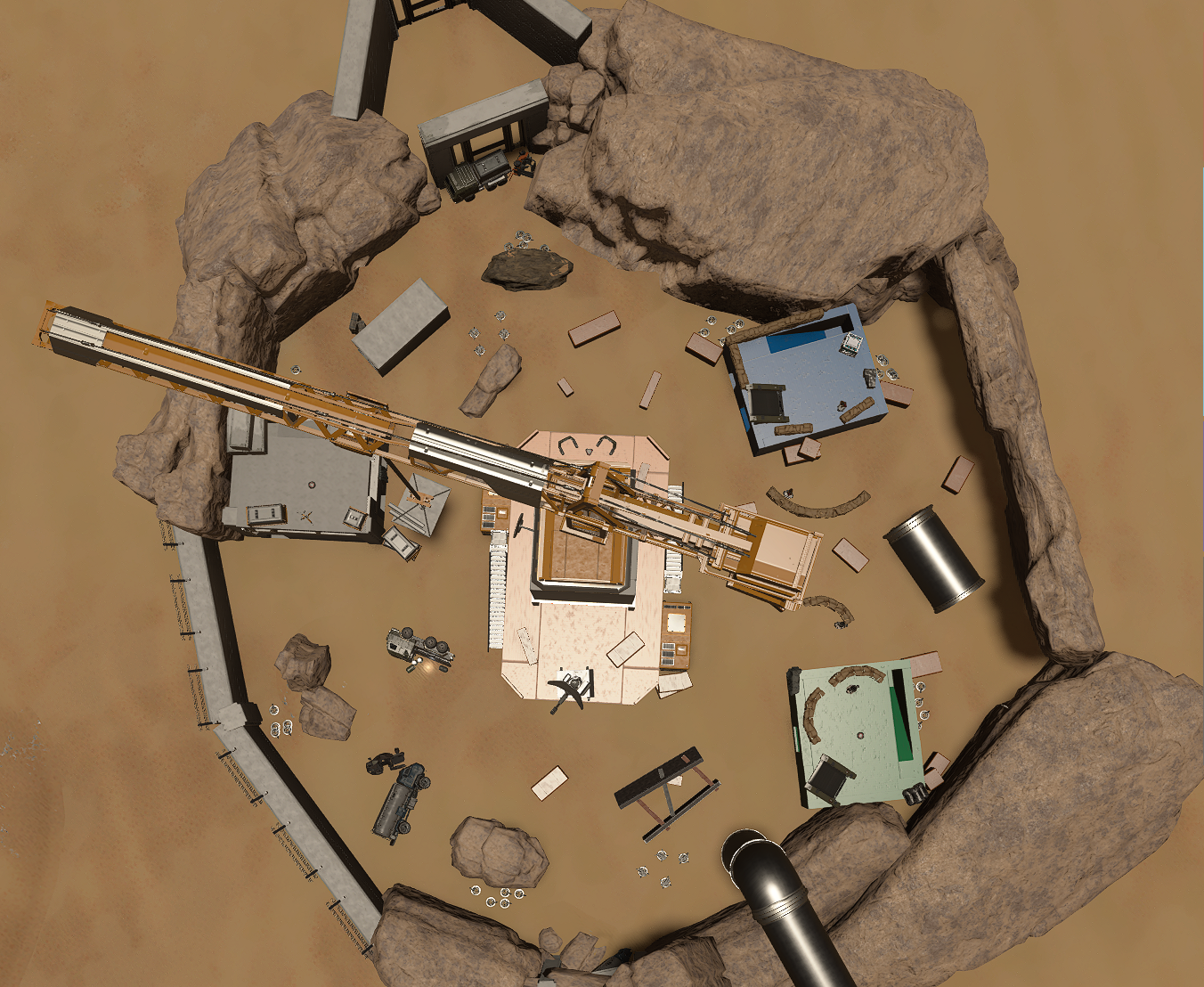

Designed for short to medium-range combat while supporting long-range engagements.
Primary focus on free-for-all, with fast-paced team deathmatch support.
Implemented an inner and outer circle lane layout with a grid to enable easy player rotation and prevent corner trapping.
Ensured each building had at least three entrances/exits (doors or jumpable windows) for fluid movement.
Aimed for a 2-3 second time-to-engagement to create fast-paced combat, inspired by Shipment and Rust from Call of Duty.

Team Slayer Spawns: Eagle and Cobra spawns are diagonally offset with cover, providing multiple movement lanes.
Spawn Flexibility: Players can rotate to outer lanes via windows and doorways, increasing strategic options.
Anti-Spawn Camping Measures:
Spawns are accessible to both teams but prioritize initial sides.
Dynamic spawns allow teams to switch sides if the enemy is nearby, preventing predictable spawn locations.
Every spawn offers at least two movement paths to maintain player agency.
FFA Spawns:
Additional spawns on the outskirts ensure players can enter from all points.
Reduces time to engagement and prevents spawn camping in FFA matches.
Equipment and Weapon Placement

I placed the weapons along the lanes of the map for easy access to the different weapons in the map.
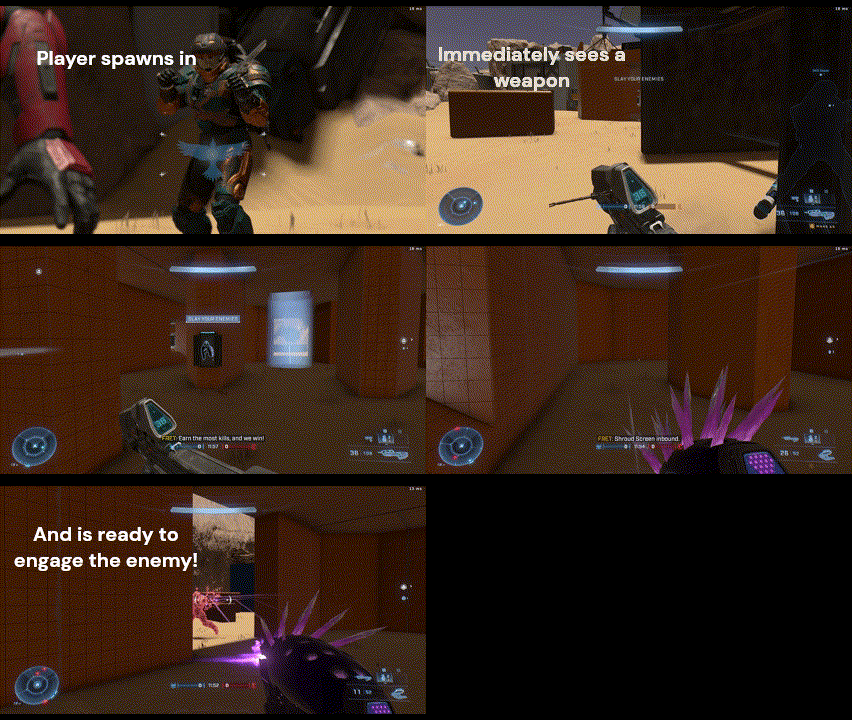
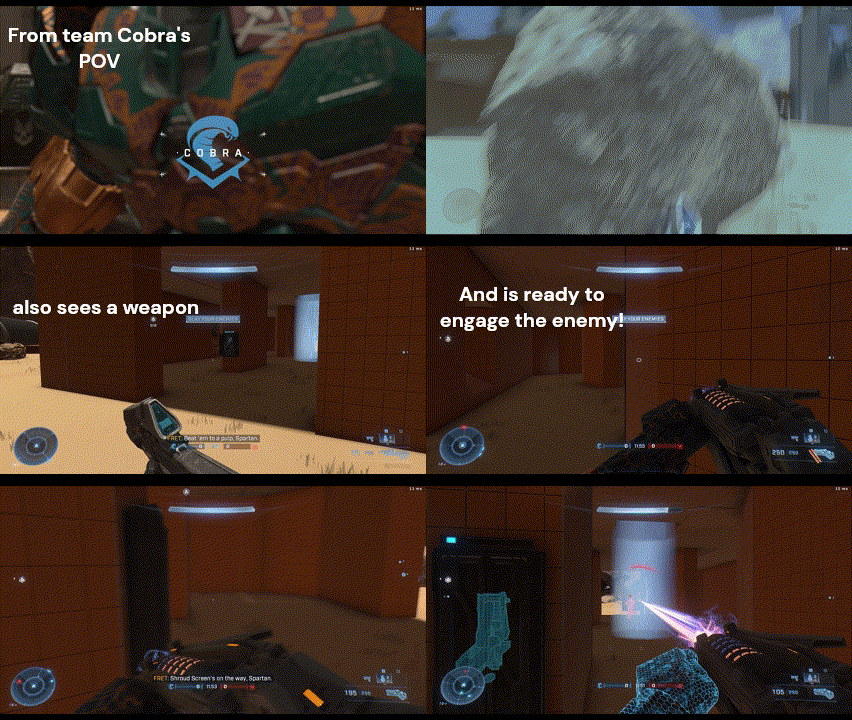
Weapons were placed with initial spawns in mind allowing players to immediately grab a new weapon!
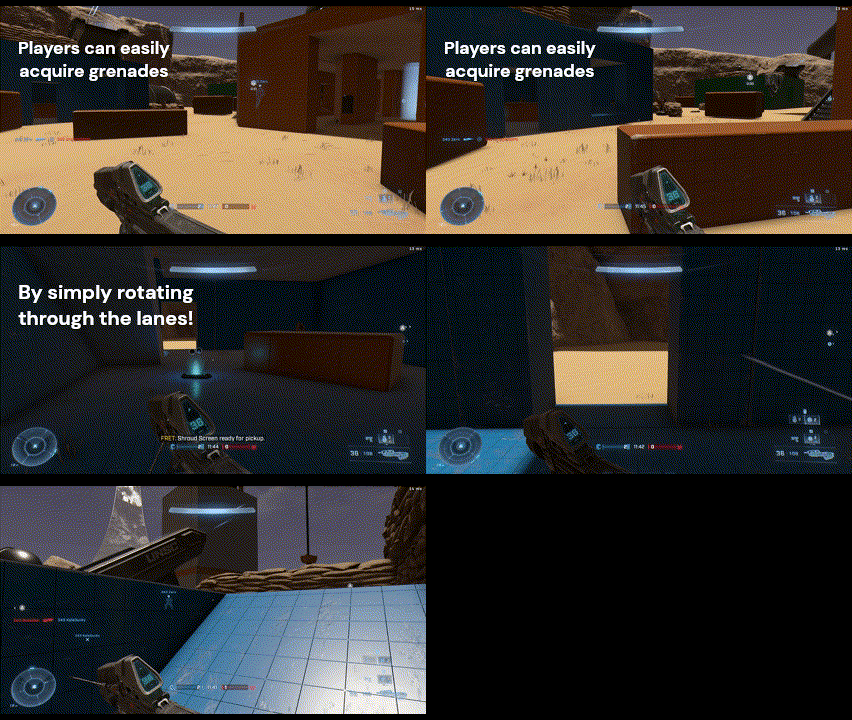
Likewise grenades were also placed with the lanes in mind to create ease of access.
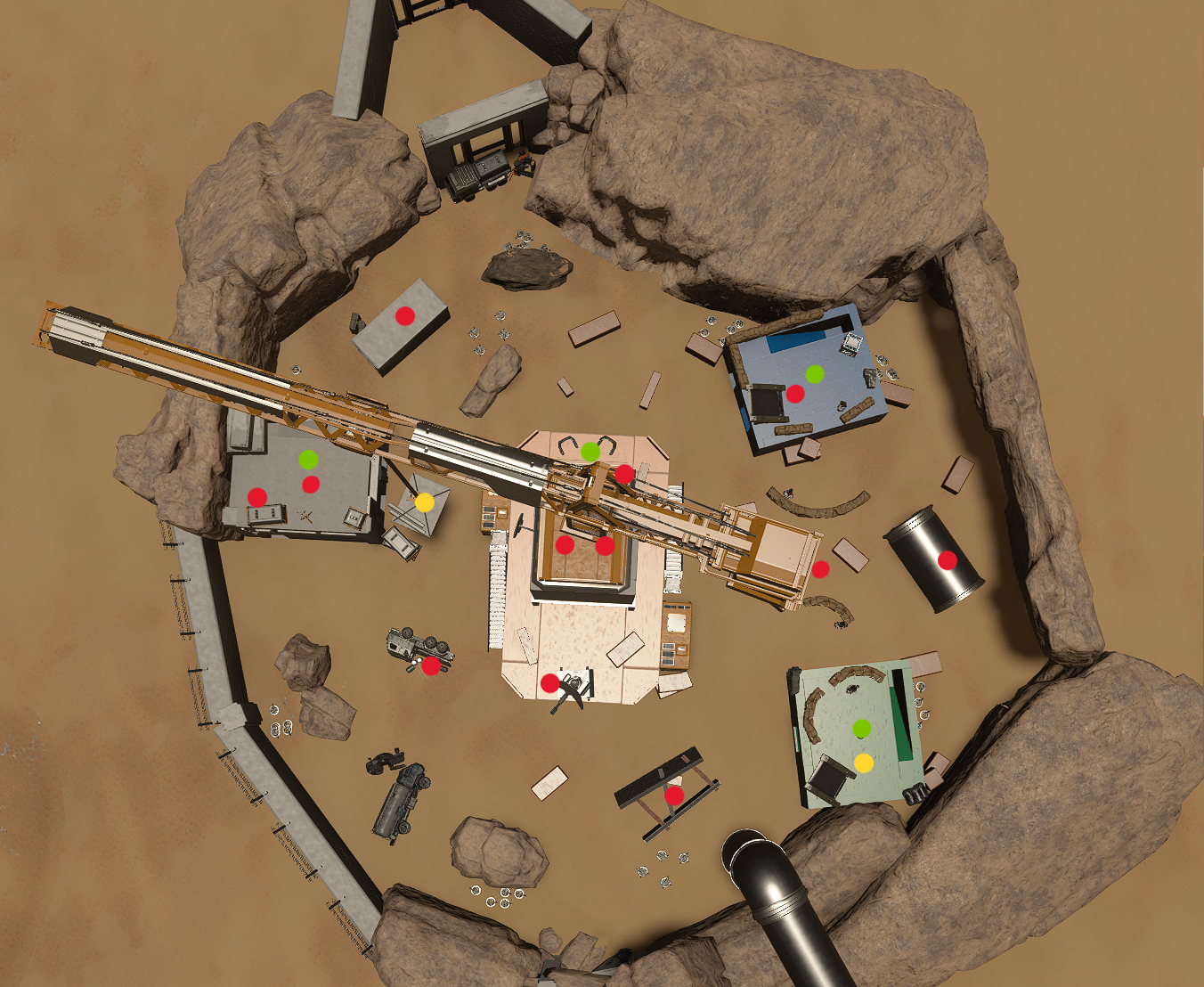
Red Dot = Weapon | Green Dot = Grenade | Yellow Dot = Equipment
Supporting Team Play

In the early stages of map creation, I planned for there to be specific locations that players would be able to use as callouts to reinforce strategic gameplay and enhance map flow. I did this by use of color and visual attributes. As seen on the image to the left, I made each building have its own signifier to make it stand out from the rest.
Construction/concrete building on the left, crane in the center, then blue and green buildings on the right. This way players can specifically point out to teammates where enemies are and easily memorize the map layout to get to their favorite weapons and positions.
Playtesting & Iteration
Playtesting Process: Conducted around seven playtests across multiple modes with different user groups.
Feedback-Driven Iteration: Changes were only made after testing, based on user feedback, suggestions, and personal observations.
Power Weapon Addition:
Initially had no power weapons, believing it fit the map’s goals.
Playtesters suggested adding one to create a central point of conflict.
Added the Skewer and Hydra in open areas to encourage fights over them.
Impact of Changes:
Players frequently gravitated toward power weapon locations in both FFA and Team Slayer.
Adjusted weapon placements to fit existing lanes and improve map flow.
FFA Slayer Playtest
3v3 Slayer Playtest
Ending Notes
I learned that when working on a personal project, to bring people in sooner. The more eyes on a project, especially a multiplayer one, the better it will do. It was odd for me to feel hesitant about the project; with every other project I had worked on, I had no issue throwing it to the metaphorical wolves, but this one I did. I am happy I had that experience because it pushed me out of my comfort zone with a project that was close to my heart, which only made me a better designer. Being able to let go of your own fears when it comes to projects, whether personal or professional (or a mix of both), enables you to enter into a place that allows you to surpass what you thought was possible in your own work.
On a less philosophical note, I also learned through this project that I could go through the workflow to create a successful player map of decent size. I was able to translate my workflow from single-player, non-FPS-style games to this project, creating a map that users enjoyed playing on in multiple modes. Moreover, this project helped me overcome some unseen issues I had as a designer and prove my competence in PVP map design.
Check out my other projects!